Loading…


Article
As Australian lenders rapidly update their credit criteria in response to APRA caps and trust restrictions, mortgage brokers must pivot quickly. This practical playbook outlines the five biggest policy changes impacting borrowing capacity.
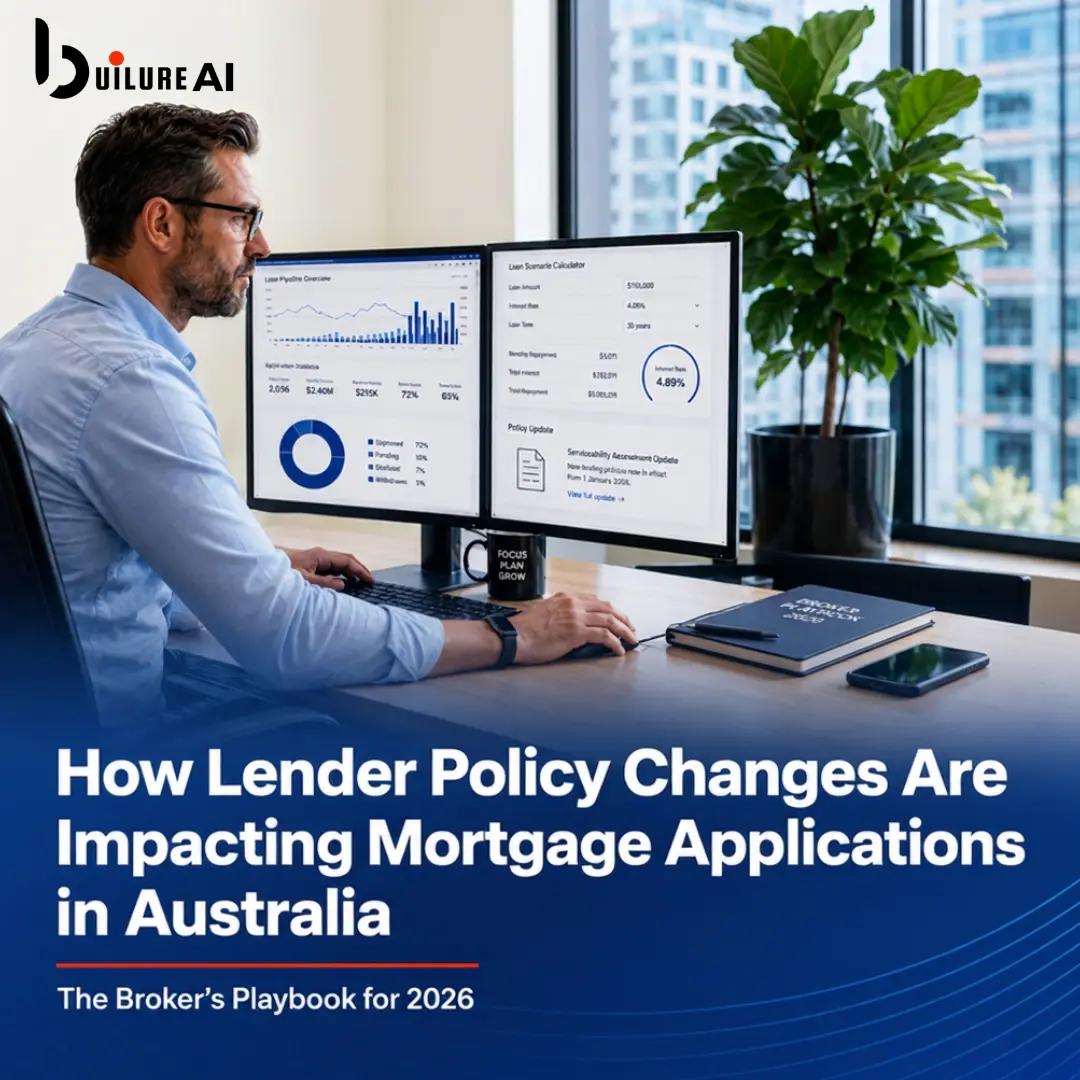
If you are a mortgage broker in Australia right now, you already know the feeling. A client who would have sailed through an approval process twelve months ago is now facing questions, delays, and in some cases, outright declines. The loan has not changed. The client has not changed. But the lender policies have.
Across Australia, major banks, regional lenders, and non-bank institutions are all updating their credit policies at a pace that is challenging even the most experienced brokers to keep up with. Understanding what has changed, why it has changed, and how to work within the new rules is now one of the most valuable skills a mortgage broker can offer.
With mortgage brokers now writing more than 80% of all new residential home loans in Australia, the brokers who master this skill have an enormous market opportunity and those who don't risk losing clients to competitors who do.
This guide breaks down the most significant lender policy changes impacting mortgage applications right now and gives your brokerage a clear, practical playbook to adapt.
Lender credit policies do not change in isolation. They respond to a combination of regulatory pressure, economic conditions, and risk appetite shifts within individual institutions.
The key drivers behind the current wave of policy changes include:
The result is a lending environment where lender behaviour is already shifting in anticipation of these constraints even where the DTI cap is not yet binding on most borrowers, credit appetite is tightening and approval conditions are becoming more complex. Mortgage brokers who understand this gap and know how to bridge it are the ones writing the most business right now.
One of the most consistent changes across lenders in the current environment is the tightening of income verification standards. Lenders are now requiring more documentation, more recent payslips, and in many cases, a longer history of income stability before they will accept an application.
Broker action: Prepare a complete income documentation pack for every client before submitting. Do not rely on the lender to request missing documents after submission. Delays cost approvals.
This is one of the most significant policy shifts affecting property investors and high-net-worth borrowers. Major lenders have either restricted or paused new lending to trusts and companies due to rising compliance risks, the complexity of assessing income and liability within these structures, and a surge in social media content particularly on TikTok instructing borrowers on how to use trust structures to artificially stretch their borrowing capacity.
The impact on brokers is direct, and the limitations are highly lender-specific, as tracked in The Broker Times Trust Lending Framework:
Broker action: For clients with trust structures, pivot immediately to non-bank lenders such as Pepper Money, Liberty Financial, and Resimac, who have maintained more flexible policies for trust and company borrowers.
Self-employed borrowers have always faced more scrutiny than PAYG applicants. But the current policy environment has made this gap even wider.
For self-employed borrowers, the difference between a lender who applies generous add-back policies and one who does not can mean a borrowing capacity difference of $100,000 or more on the same income figure.
Broker action: Know which lenders have the most favourable self-employed income policies for your client's specific business structure. This is where broker expertise delivers the most tangible financial value to clients.
Following increased ASIC scrutiny on responsible lending, lenders have updated how they assess a borrower's living expenses. Most lenders now use the Household Expenditure Measure (HEM) as a minimum benchmark, but many are applying higher figures based on postcode, household size, and declared lifestyle expenses.
Broker action: Coach clients to review their bank statements before applying. Unnecessary subscriptions, high dining expenses, and irregular large transactions can all negatively impact a lender's expense assessment. A three-month clean-up period before application can meaningfully improve borrowing capacity.
Property investors are facing a double impact in the current environment. Not only are DTI caps limiting how much they can borrow relative to income, but several lenders have also tightened their loan-to-value ratio (LVR) policies for investment lending.
Broker action: For investor clients, model the application across multiple lenders before submitting. The difference in borrowing capacity between a lender with a 90% LVR policy and one with an 80% LVR policy can be the difference between a deal proceeding or collapsing.
The brokers who are consistently getting approvals in this environment share a common approach. They are not just submitting applications and hoping for the best. They are doing the work before the application goes in.
Here is what separates the top performers:
The brokers who treat lender policy knowledge as a core professional skill are the ones building the strongest client relationships and the most referral-driven businesses.
Already had a client declined because of a trust structure, a DTI cap, or a self-employed income assessment that didn't stack up? builureAI helps you identify the right lender before you submit, so you stop losing deals to policy changes you didn't see coming.
👉 Book a 10-Minute builureAI Demo
See how builureAI helps Australian mortgage broker firms track lender policy changes in real time, automate application preparation, and build a business that grows regardless of what the credit environment throws at it.
30-minute discovery call. No deck, no slides, just a real conversation about what you're trying to build and whether we can help.